Phoenician alphabet
The ancestor of nearly every alphabet in the world, born on the coast of present-day Lebanon.
1In brief
The ancestor of nearly every alphabet in the world, born on the coast of present-day Lebanon.
Type: Abjad — Mainly consonants are written; vowels are guessed or added as small marks. Understand types of scripts.
2History
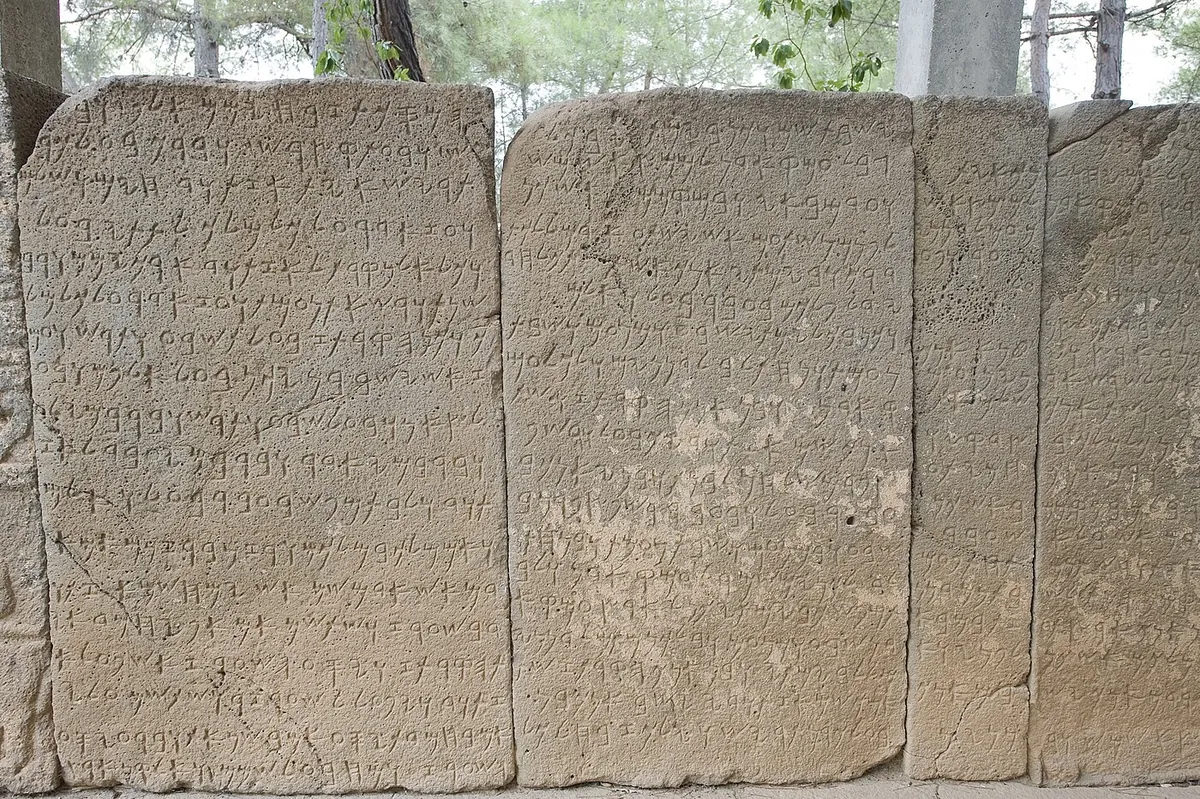
Around 1050 BC, Phoenician cities such as Byblos, Tyre and Sidon used an alphabet of 22 letters, all consonants, written right to left. Its letters descend from an older script, Proto-Sinaitic, inspired by hieroglyphs: aleph was an ox head, beth a house.
As great seafarers, the Phoenicians spread their alphabet around the Mediterranean, as far as Carthage. The Greeks adapted it; Aramaic grew out of it, and from Aramaic came Hebrew, Arabic and perhaps the scripts of India.
3For real
4Lineage
This script has no known ancestor among the scripts shown here: it was invented locally, or its origins are still debated.
It gave rise to
5Did you know?
- Our A is an upside-down ox head: point down, you can still see the horns of the Phoenician aleph.
- The sarcophagus of King Ahiram in Byblos bears one of the oldest Phoenician inscriptions.