Runes
The script of the Germanic peoples and the Vikings, carved in wood, bone and stone.
1In brief
The script of the Germanic peoples and the Vikings, carved in wood, bone and stone.
Type: Alphabet — Each letter stands for a sound, consonant or vowel. Understand types of scripts.
2History
The oldest known runes date from the 2nd century AD. Their exact origin is debated; they were probably inspired by the alphabets of Italy, including Latin. They are made of straight strokes, perhaps because these were easier to cut across the grain of wood.
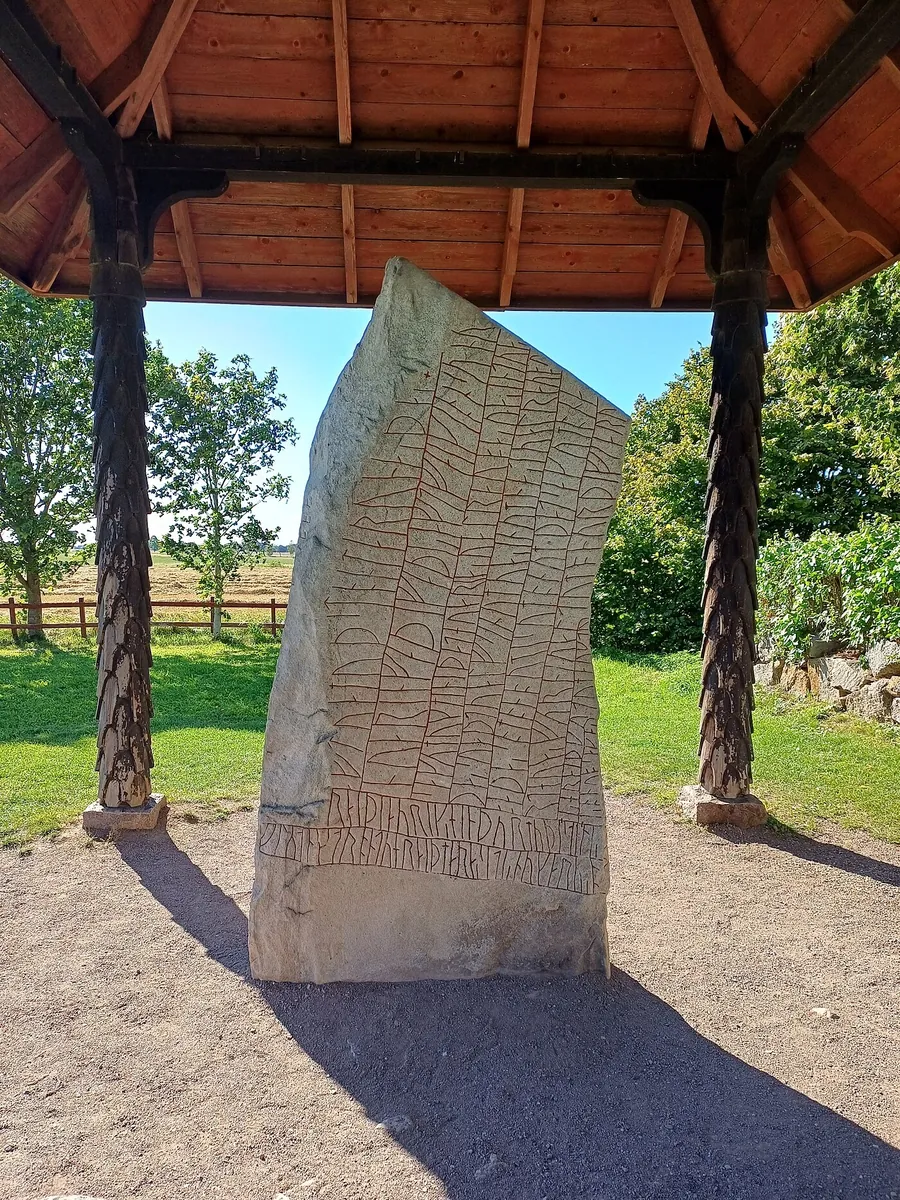
The runic alphabet is called the futhark, after its first six letters. In the Viking Age it was simplified to 16 signs. Thousands of runestones, mostly in Sweden, remember a dead person, a journey or a bridge that was built. Runes gave way to the Latin alphabet in the Middle Ages.
3A word to see
4For real
5Lineage
It descends from
6Did you know?
- The Bluetooth logo combines two runes, ᚼ and ᛒ: the initials of the Danish king Harald “Bluetooth”.
- The Rök runestone in Sweden bears the longest known runic inscription, over 700 signs.