ᐃ ᐅ ᐊ ᐱ ᐳ ᐸ ᑎ ᑐ ᑕ ᑭ ᑯ ᑲ ᒋ ᒍA few signs of this script.
1In brief
A geometric script where you rotate a sign to change the vowel.
Type: Abugida — Each sign is a consonant with a built-in vowel, changed by small marks. Understand types of scripts.
2History
In 1840 the missionary James Evans worked out, with Cree speakers, a script for the Cree language at Norway House, in present-day Manitoba. Each geometric shape stands for a consonant, and its orientation gives the vowel: ᐱ (pi), ᐳ (pu), ᐸ (pa).
The system was adapted to other languages, including Inuktitut from the late 19th century. In Nunavut, Canada’s Inuit territory, signs, newspapers and official documents use syllabics.
3A word to see
ᐃᓄᒃᑎᑐᑦ
inuktitut
“the language of the Inuit”
4For real
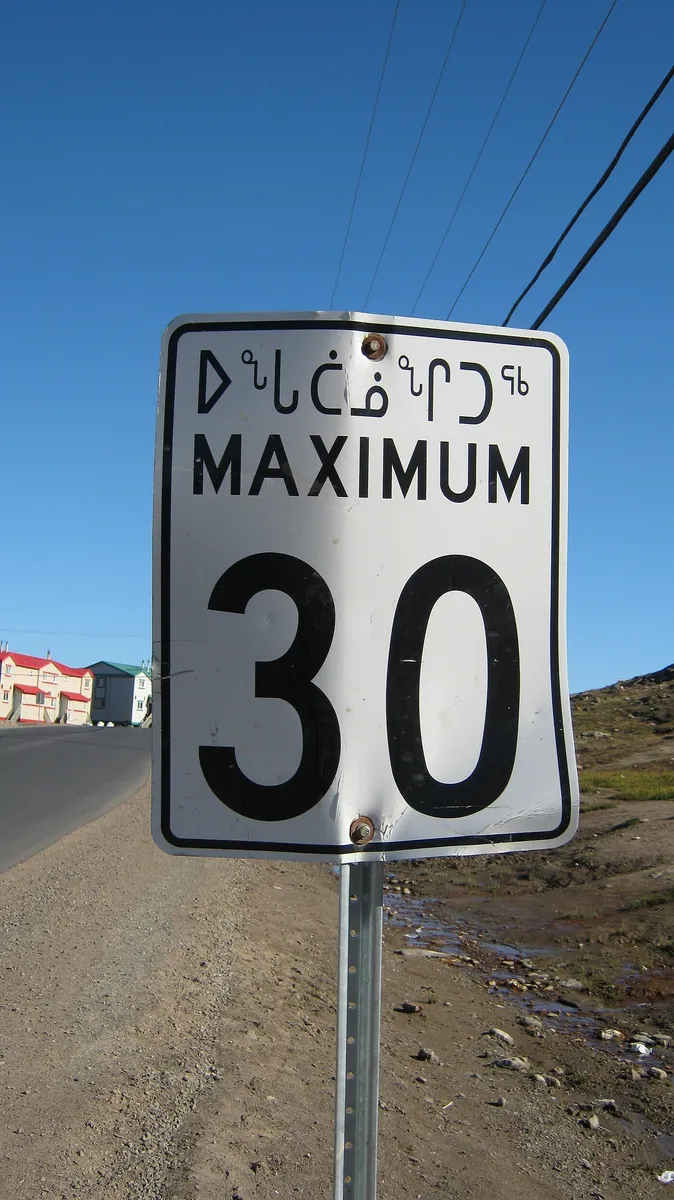
5Lineage
This script has no known ancestor among the scripts shown here: it was invented locally, or its origins are still debated.
6Did you know?
- Learn a dozen shapes and their four orientations, and you can read most of it.
- Small raised signs mark consonants on their own at the end of a syllable: ᐃᓄᒃ (inuk).